

An eggless lemon loaf cake appears as a baked dessert that relies on plant-based or dairy-based substitutes instead of eggs. The eggless lemon loaf cake consists of refined flour, sugar, yogurt or milk, oil, and fresh lemon juice. The structure forms through chemical leavening agents such as baking powder and baking soda.
The crumb remains soft due to the balance between liquid and fat components. A standard slice of eggless lemon loaf cake contains approximately 180 to 220 calories. The fat content remains near 8 to 10 grams per slice. Carbohydrates form the primary energy source, usually near 25 grams. Protein content remains low due to the absence of eggs.
The eggless lemon loaf cake holds a simple ingredient profile and follows a direct preparation method. The eggless lemon loaf cake moves through a stable baking process under standard oven conditions. The Moist Chocolate Mug Cake in the Microwave Without Eggs uses a similar eggless base, though the method shifts to a shorter heating cycle and a smaller batch format.
What ingredients are needed for making Moist Eggless Lemon Loaf Cake
- Refined flour
- Granulated sugar
- Yogurt or plant-based milk
- Vegetable oil
- Fresh lemon juice
- Lemon zest
- Baking powder
- Baking soda
- Salt
- Vanilla extract
Steps to make Bake a Moist Eggless Lemon Loaf Cake
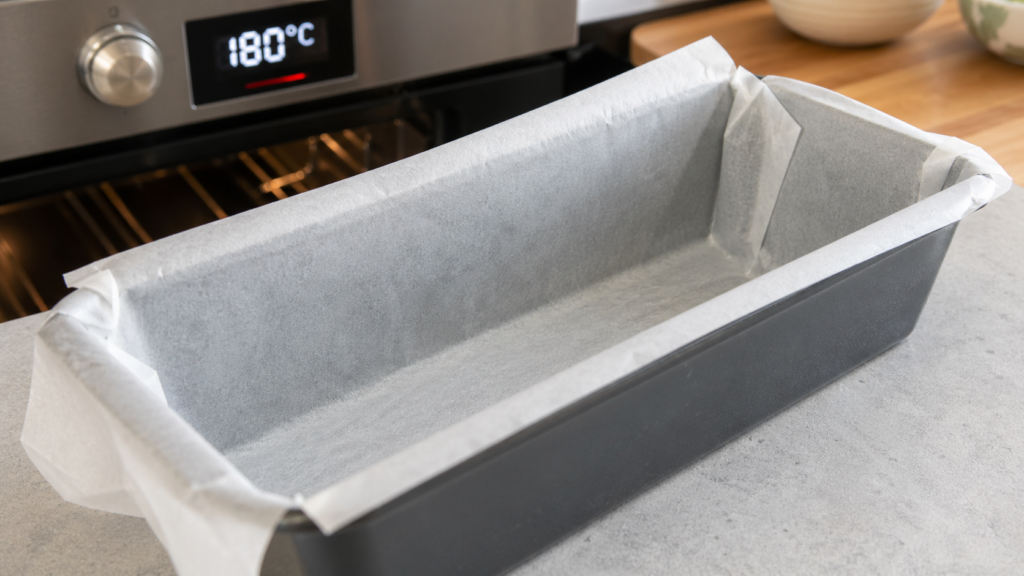
- Preheat the oven to 180 degrees Celsius. Line a loaf pan with parchment paper. This prepares a stable baking environment.
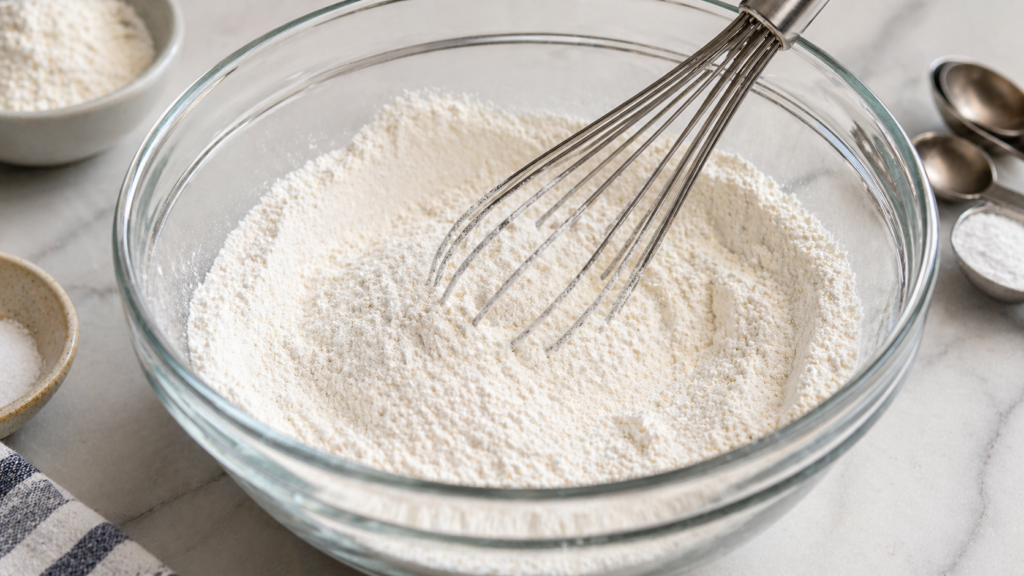
- Combine refined flour, baking powder, baking soda, and salt in a bowl. Mix until the dry ingredients appear evenly distributed.
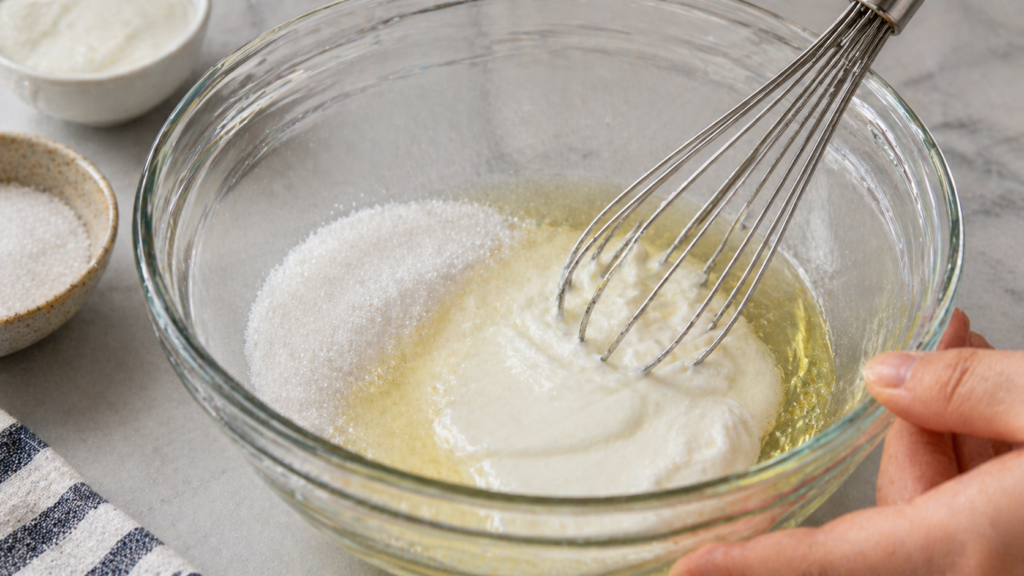
- In another bowl, add sugar, yogurt, and oil. Stir until the mixture forms a smooth liquid base.
- Add lemon juice and lemon zest into the wet mixture. The mixture begins to show a mild citrus aroma.

- Gradually add the dry ingredients into the wet mixture. Fold gently to maintain a consistent batter texture.
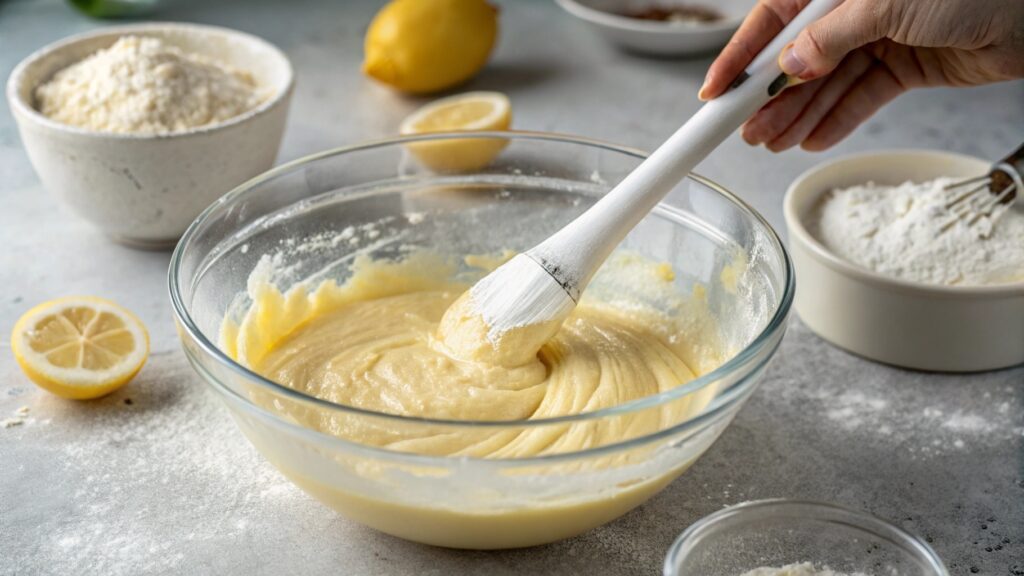
- Add vanilla extract and mix briefly. The batter remains fluid without lumps.
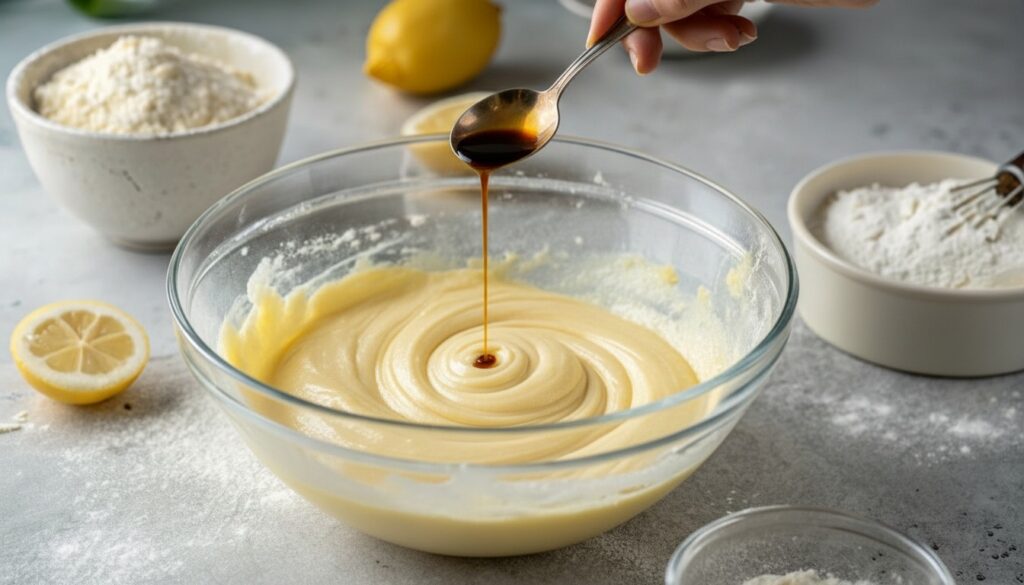
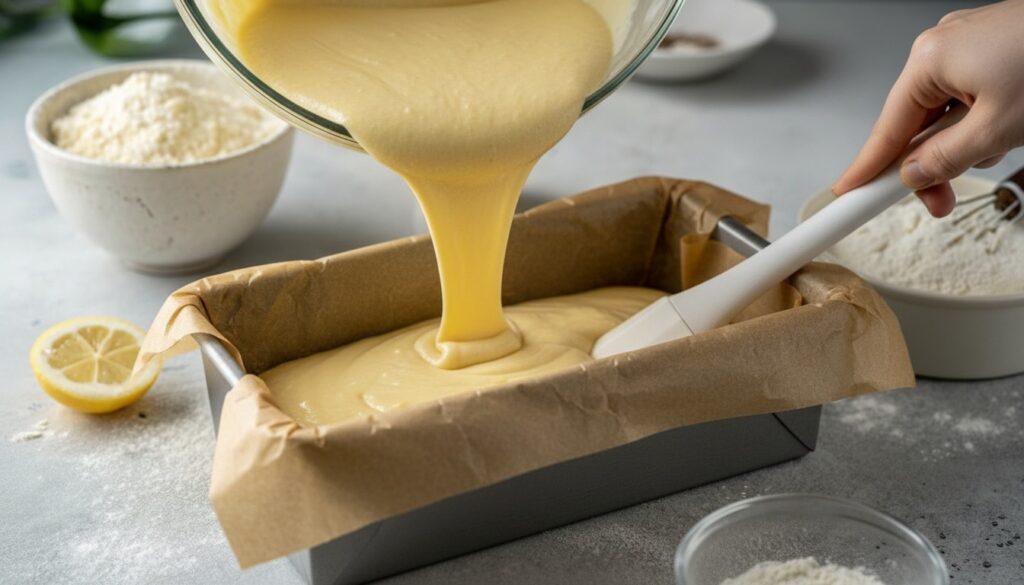
- Pour the batter into the prepared loaf pan. Spread the surface evenly using a spatula.
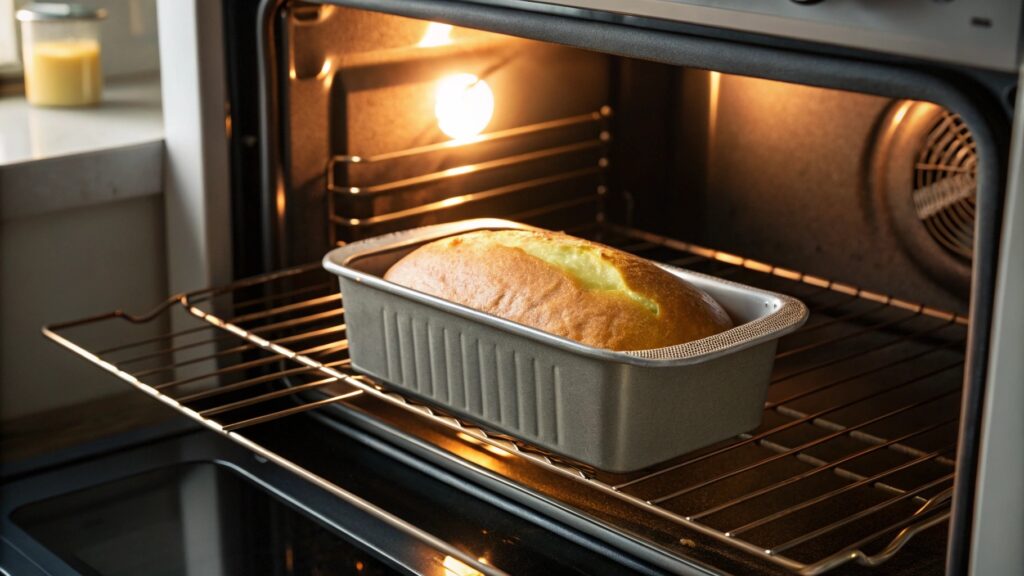
- Place the pan in the oven and bake for 35 to 40 minutes. The top surface turns light golden.
- Insert a toothpick in the center to check doneness. The toothpick comes out clean when the cake is ready.

- Remove the loaf from the oven and allow it to cool. The eggless lemon loaf cake stabilizes before slicing.

Why does the eggless lemon loaf cake turn dense
A dense lemon loaf cake appears when the batter lacks aeration. Excess mixing compresses the structure. Insufficient leavening agents also affect rise. The crumb remains compact.
Why does the lemon loaf cake crack on top
The lemon loaf cake shows surface cracks when the oven temperature runs high. Rapid expansion occurs in the early baking stage. The outer layer sets before internal expansion completes.
Why does the lemon loaf cake taste bitter
A bitter note in lemon loaf cake appears when baking soda exceeds the required amount. Lemon zest inclusion beyond a balanced level also affects taste. The flavor shifts toward sharp bitterness.
Why does the lemon loaf cake remain undercooked inside
The lemon loaf cake remains undercooked when baking time falls short. A thick batter layer slows heat penetration. The center retains moisture and appears sticky.
FAQs
What makes lemon loaf cake rise without eggs
The eggless lemon loaf cake relies on baking powder and baking soda. These agents release gas during baking. The batter expands and forms a soft structure.
Can whole wheat flour replace refined flour in lemon loaf cake
Whole wheat flour can replace refined flour in eggless lemon loaf cake. The texture becomes denser. The crumb shows a slightly coarse structure.
How long does lemon loaf cake remain fresh
The eggless lemon loaf cake remains fresh for two to three days at room temperature. Storage in an airtight container slows moisture loss.
Can oil be replaced with butter in lemon loaf cake
Butter can replace oil in eggless lemon loaf cakes. The texture becomes firmer after cooling. Oil-based versions remain softer.
Why does lemon loaf cake stick to the pan
The eggless lemon loaf cake sticks when the pan lacks proper lining or greasing. The surface bonds with the metal during baking.
Conclusion
The eggless lemon loaf cake reflects a stable baking system with a balanced ratio of dry and wet components. The eggless lemon loaf cake maintains a moist crumb through oil-based fat and controlled liquid content. The structure forms through chemical leavening rather than protein binding from eggs. The preparation process remains linear and predictable under standard baking conditions.

How to Bake a Moist Eggless Lemon Loaf Cake for Fresh Summer Evenings
Course: Recipes8
servings15
minutes35
minutes200
kcalIngredients
1 and 1/2 cups refined flour
3/4 cup granulated sugar
1/2 cup yogurt
1/3 cup vegetable oil
1/4 cup fresh lemon juice
1 tablespoon lemon zest
1 teaspoon baking powder
1/2 teaspoon baking soda
1/4 teaspoon salt
1 teaspoon vanilla extract
Directions
- Preheat the oven to 180 degrees Celsius. Line a loaf pan with parchment paper.
- Combine refined flour, baking powder, baking soda, and salt in a bowl. Mix until uniform.
- Add sugar, yogurt, and oil in another bowl. Stir until smooth.
- Add lemon juice and lemon zest. Mix lightly.
- Add dry ingredients into the wet mixture gradually. Fold gently to form a consistent batter.
- Add vanilla extract. Mix briefly until the batter appears smooth.
- Pour the batter into the prepared loaf pan. Spread evenly using a spatula.
- Place the pan in the oven. Bake for 35 to 40 minutes until the top turns light golden.
- Insert a toothpick in the center. It comes out clean when done.
- Remove the loaf and allow it to cool on a rack before slicing.
Notes
- 1. Batter consistency remains slightly thick but pourable.
2. Overmixing affects crumb texture.
3. Cooling stabilizes internal structure before cutting.