Introduction
Traditional French ratatouille appears as a vegetable preparation that reflects regional cooking patterns from southern France. French ratatouille uses eggplant, zucchini, tomatoes, and peppers as core components.
The dish behaves as a slow-cooked mixture where each ingredient retains its form while integrating with others. French ratatouille remains grounded in seasonal produce and basic kitchen processes.
The preparation method stays consistent across many variations. The structure of traditional French ratatouille reflects a layered cooking sequence rather than a single-step process.
Recipe Overview of Traditional French Ratatouille
Traditional French ratatouille follows a structured sequence that separates ingredient preparation from cooking. The recipe operates through gradual heat exposure and controlled moisture release.
Key Recipe Details
| Parameter | Value |
| Preparation Time | 20 minutes |
| Cooking Time | 40 minutes |
| Total Time | 60 minutes |
| Servings | 3 portions |
| Calories (per serve) | 180 to 220 kilocalories |
French ratatouille remains stable under medium heat conditions. The vegetables soften while maintaining their outer structure. The mixture thickens over time.
Ingredients Used in Traditional French Ratatouille
French ratatouille includes a defined set of vegetables and seasoning elements. The ingredients operate in balance rather than dominance.
Ingredient List
- 1 medium eggplant, diced
- 2 zucchini, sliced
- 3 tomatoes, chopped
- 1 bell pepper, sliced
- 1 onion, chopped
- 3 garlic cloves, crushed
- 3 tablespoons olive oil
- 1 teaspoon dried herbs de Provence
- Salt as required
- Black pepper as required
Traditional French ratatouille reflects a reliance on fresh vegetables. The ingredient composition remains plant-based. The herbs contribute mild aromatic notes. The oil acts as a heat transfer medium.
Method for Preparing Traditional French Ratatouille
French ratatouille follows a stepwise cooking method. Each vegetable enters the pan at a specific stage.
Step-by-Step Method
- Heat olive oil in a wide pan over medium heat.
- Add chopped onion. Cook until the texture softens.
- Add garlic. Stir until aroma appears.
- Introduce diced eggplant. Cook until surface moisture reduces.
- Add zucchini slices. Stir at regular intervals.
- Add bell peppers. Allow gradual softening.
- Add chopped tomatoes. Mix evenly.
- Add herbs, salt, and pepper.
- Cover the pan. Cook on low heat for 20 minutes.
- Stir occasionally to maintain uniform cooking.
French ratatouille develops through gradual integration of vegetables. The mixture thickens as water content reduces. The surface appears glossy due to oil distribution.
Alternative Methods for Traditional French Ratatouille
Traditional French ratatouille appears in different preparation styles across regions. The base ingredients remain consistent.
Alternative Approaches
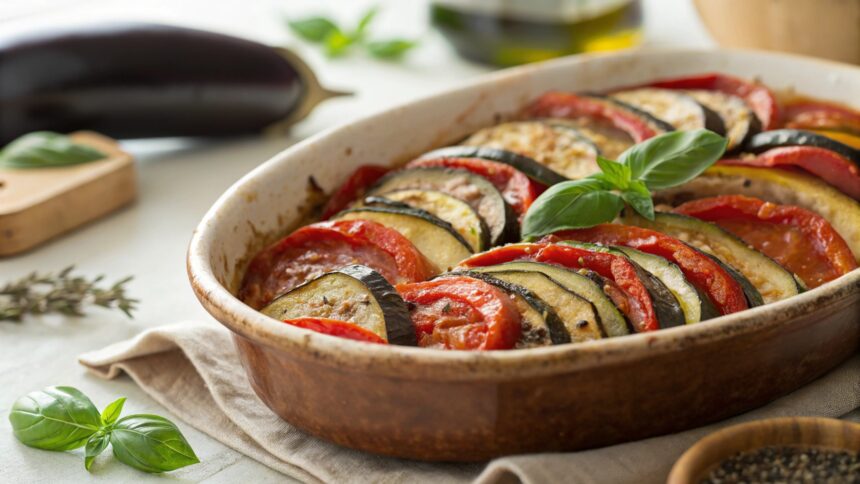
- Oven-baked method
Vegetables are layered in a dish. Heat exposure occurs from all sides. - Stovetop quick method
Cooking time reduces. Heat level remains slightly higher. - Layered presentation style
Vegetables are arranged in slices. Visual structure becomes more defined.
French ratatouille adapts to available tools. The cooking pattern remains gradual in all variations.
Check Out: 5 Healthy Salad Meal Recipes for Weight Loss
Common Problems in making French Ratatouille
Traditional French ratatouille sometimes shows variation in texture and moisture levels. These issues relate to ingredient handling and heat control.
Observed Problems
- Excess water in the final dish
- Uneven cooking of vegetables
- Mushy texture formation
- Lack of integrated flavor
Problem Causes
- High moisture vegetables added early
- Continuous high heat exposure
- Lack of staged cooking
- Overcrowded cooking surface
French ratatouille requires spacing in the pan. The vegetables need contact with heat. The process depends on gradual evaporation.
Practical Tips for Better Results
Traditional French ratatouille responds to minor adjustments in preparation and cooking sequence.
Operational Tips
- Cut vegetables into uniform sizes
- Use a wide pan for even heat distribution
- Maintain medium to low heat levels
- Add tomatoes at a later stage
- Stir at intervals rather than continuously
French ratatouille stabilizes under controlled heat. The vegetables maintain structure when handled with minimal disturbance.
Ingredient Substitutes in French Ratatouille
French ratatouille allows substitution based on availability. The replacements follow similar moisture and texture properties.
Substitution Options
| Original Ingredient | Possible Substitute |
| Eggplant | Mushroom |
| Zucchini | Yellow squash |
| Bell pepper | Mild green chili |
| Herbs de Provence | Thyme and oregano mix |
French ratatouille remains functional with substitutions. The overall structure stays intact. The taste profile shifts slightly.
Nutritional Composition of Traditional French Ratatouille
French ratatouille contains plant-based components. The dish reflects moderate calorie content.
Nutritional Elements
- Dietary fiber from vegetables
- Natural sugars from tomatoes
- Healthy fats from olive oil
- Vitamins from mixed produce
French ratatouille behaves as a balanced vegetable preparation. The oil content remains moderate. The fiber content appears consistent.
How to Store and Reuse
Traditional French ratatouille maintains quality during short-term storage. The moisture level stabilizes after cooling.
Storage Notes
- Refrigerate in a sealed container
- Use within two days
- Reheat on low heat
French ratatouille thickens slightly after storage. The vegetables absorb residual moisture. The flavor appears more integrated.
Conclusion
Traditional French ratatouille reflects a structured vegetable cooking method based on gradual heat application. French ratatouille maintains ingredient identity while forming a unified mixture.
The preparation sequence determines texture and moisture balance. Traditional French ratatouille remains consistent across variations due to its defined base ingredients. The dish operates through simple processes that rely on timing and heat control.
Traditional French Ratatouille in a Simple Method
Course: Recipes3
servings20
minutes40
minutes200
kcalIngredients
1 medium eggplant, diced
2 zucchini, sliced
3 tomatoes, chopped
1 bell pepper, sliced
1 onion, chopped
3 garlic cloves, crushed
3 tablespoons olive oil
1 teaspoon dried herbs
Salt as required
Black pepper as required
Directions
- Heat olive oil in a wide pan over medium heat.
- Add chopped onion and cook until soft.
- Add crushed garlic and stir briefly.
- Add diced eggplant and cook until moisture reduces.
- Add sliced zucchini and cook evenly.
- Add bell pepper and continue cooking.
- Add chopped tomatoes and mix.
- Add herbs, salt, and black pepper.
- Cover and cook on low heat for 20 minutes.
- Stir occasionally until vegetables soften and mixture thickens.
Notes
- Cut vegetables in similar sizes for even cooking.
Use a wide pan to allow moisture evaporation. - Calories: 200 kcal
Carbohydrates: 18 g
Protein: 4 g
Fat: 12 g
Fiber: 6 g